
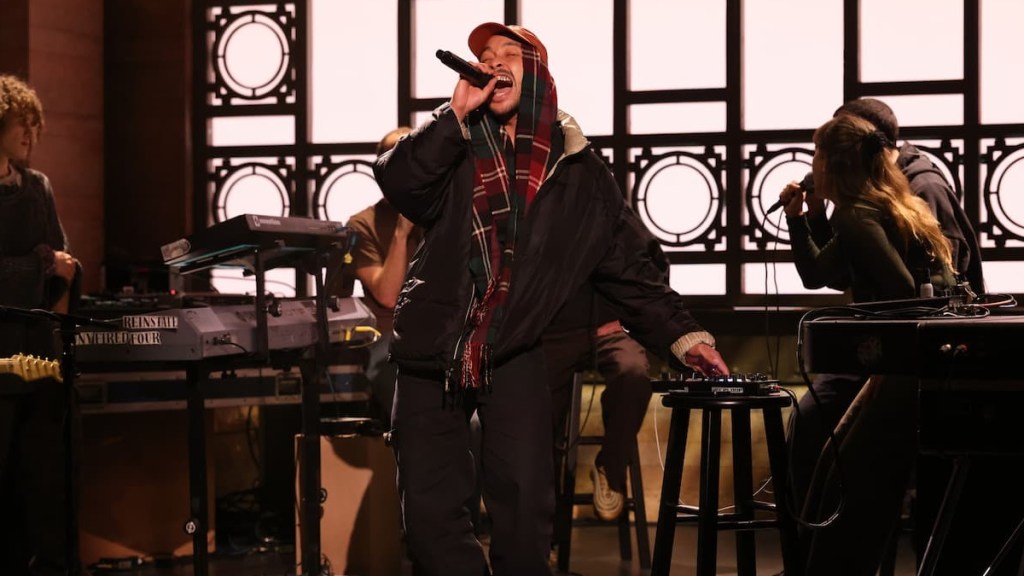
In an era where stans can dox people and jobs don’t pay enough, music criticism is waning. There’s hardly any infrastructure to support it. Not to mention, there’s a general sense of ‘let people enjoy things’ online that permeates all music discussion, eventually turning into pacification. However, one artist who argues for the importance of music criticism is singer, producer, and blossoming actor Dijon. He yearns for the times when print magazines were still fundable, and journalists would lay into albums in the meanest ways.
Recently, “The Dress” crooner spoke with Pitchfork for their Over/Under series. There, he was prompted to ponder the state of music criticism: Overrated or Underrated? He emphatically leaned towards the latter, recalling how fundamental reading profiles, interviews, and album reviews were to his musical development. Without them, Dijon argued, he wouldn’t have the same artistic depth as he has today. Moreover, he stressed that all the journalists are way too nice to new records. Instead, they need to go back to the days of more aggressive criticism.
Videos by VICE
Dijon Wants Music Reviews to Get Harsher
“I moved around so much that music criticism was how I learned about things,” he tells the outlet. “I mean, I had cousins and stuff, you know. All the early rap music that I grew up around was given to me. But when I started branching out, and I was not really tethered to a space anymore, I would read a ton of music journalism and just try to figure out what CDs to torrent. It really changed my life. I value it quite a bit. I still read a lot of music criticism.”
Dijon continues, “I think it’s a little bit too soft now. I think all criticism should be dangerously harsh, actually. So, underrated. Pitchfork, honestly, you guys can go harder. I think you can go harder. Yeah, be less kind, I think.”
This all stems from a precision and methodical approach he brings to his own work. In a cover story with Pitchfork, Dijon opens up about the radical intentionality he had behind his latest album, Baby. “I wanted my music to be positively embarrassing to play in public,” he explains. “There’s a passivity that’s built into music right now. I was like, ‘I refuse for my music to be viable as a background thing.’ I wanted, initially, for the volumes to fluctuate pretty intensely, so that you would have to constantly turn it up or turn it down.”
More
From VICE
-

Screenshot: NetEase -

Dan Kitwood/Getty Images -

Photo: Tatiana Maksimova / Getty Images -

Photo: PATRICK T. FALLON/AFP via Getty Images
