
Excerpted fromThe New Book of Listsby Amy Wallace, David Wallechinsky and Irving Wallace.ILLUSTRATIONS BY LAURA PARK SISTER DELPHINE DE ST. PAUL(buried 1876, US)Minnie Keusch was born in Detroit in 1859. At 17 she contracted typhoid fever, was certified dead, and was sealed in her coffin. Minnie’s bereaved sister begged for a final look, which she was granted. The sister bent down and kissed the “dead” girl—and Minnie opened her eyes. On that day Minnie decided to become a nun. She died in 1958, just three months short of her 100th birthday. She had served 75 years as Sister Delphine de St. Paul, in the order of the Little Sisters of the Poor.
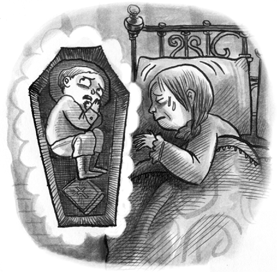 MARJORIE ELPHINSTONE(buried 17th century, Scotland)Marjorie and her husband, wealthy landowner Walter Innes, lived on a small estate called Ardtannies on the banks of the River Don. Marjorie “died” in the first decade of the 17th century and was buried wearing her jewelry. The night after the funeral, the gravedigger exhumed Marjorie and began pulling her rings from her fingers. Waking from her coma, she groaned, which sent the thief running. Marjorie gathered up her jewelry and retraced the path of the funeral cortège to Ardtannies. Inside, relatives were tending to her grief-stricken husband. Hearing a sound at the door, Walter said that had he not seen his wife dead and buried, he would have sworn it was her knock. Marjorie died for good in 1622, outliving her husband by six years. Her tombstone can be seen today in the churchyard at Inverurie in rural Aberdeenshire.MAX HOFFMAN(buried 1865, US)When five-year-old Max “died” of cholera, he was buried in the cemetery of the small Wisconsin town near his family’s farm. The next night, his mother had a nightmare—she saw Max turned over in his coffin, struggling to escape, with his hands clasped beneath his right cheek. She begged her husband to disinter their child, but he refused. The next night, Mrs. Hoffman had the same dream. Her demands were so urgent that her husband complied—at one o’clock in the morning, he and a neighbor began digging. Max’s body lay just as it had in his mother’s dream but showed no signs of life. The body was brought to the doctor who had pronounced the boy dead. Reluctantly, he attempted to revive him, and after an hour the lad’s eyelid twitched. Hot bags of salt were placed under his armpits, and he was given brandy. Within a week he had fully recovered. Max Hoffman lived to be nearly 90 and treasured until his death the little metal handles of his boyhood coffin.
 MARGARET HALCROW
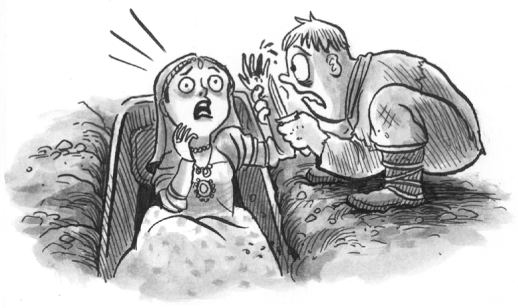
(buried in the 1670s, Scotland) Margaret Halcrow was an Arcadian woman who “died” soon after her marriage in 1674 to Rev. Henry Erskine, the minister of Chirnside in the Scottish Lothians. Knowing that Margaret was being buried with valuable jewelry, the sexton covered her grave lightly with dirt. When he dug her up later, he tried to cut off her ring finger. Margaret screamed, leaped out of the coffin, and raced to her home, shroud billowing behind her. Knocking at the entrance, she said, “Open the door, for I’m fair clemmed wi’ the cauld.”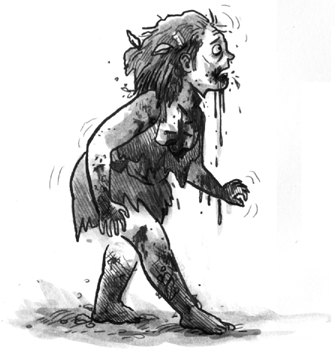 VICTORINE LEFOURCADE
(buried 1810, France) Victorine was young, beautiful, and born to a rich and noble family. She loved a poor young journalist, Julius Bossuet, but her parents would not let them marry. Instead, they “forced her to reject her lover and marry a certain Monsieur Renelle, a banker and politician without any heart, who treated her cruelly.” After a few years of misery, Victorine “fell sick of grief and sorrow, and died.” Her wish was to be buried simply in the village where she was born. When Bossuet heard of her death, his despair drove him to seek a remembrance of his love—a lock of her beautiful hair. He traveled from Paris to the village churchyard and at midnight dug out Victorine’s coffin and unscrewed the lid. As he was about to cut off a lock of hair, she opened her eyes. Reunited, the lovers stayed hidden until Victorine had regained her health, and then went to the US. After 20 years, they returned to France, feeling sure that no one would recognize her. However, she was recognized—and when Renelle heard about it, he had her arrested and laid claim to her. The court refused to honor his claim, and Victorine and Bossuet were finally free to love in their native France.
Advertisement
(buried in the 1670s, Scotland) Margaret Halcrow was an Arcadian woman who “died” soon after her marriage in 1674 to Rev. Henry Erskine, the minister of Chirnside in the Scottish Lothians. Knowing that Margaret was being buried with valuable jewelry, the sexton covered her grave lightly with dirt. When he dug her up later, he tried to cut off her ring finger. Margaret screamed, leaped out of the coffin, and raced to her home, shroud billowing behind her. Knocking at the entrance, she said, “Open the door, for I’m fair clemmed wi’ the cauld.”
(buried 1810, France) Victorine was young, beautiful, and born to a rich and noble family. She loved a poor young journalist, Julius Bossuet, but her parents would not let them marry. Instead, they “forced her to reject her lover and marry a certain Monsieur Renelle, a banker and politician without any heart, who treated her cruelly.” After a few years of misery, Victorine “fell sick of grief and sorrow, and died.” Her wish was to be buried simply in the village where she was born. When Bossuet heard of her death, his despair drove him to seek a remembrance of his love—a lock of her beautiful hair. He traveled from Paris to the village churchyard and at midnight dug out Victorine’s coffin and unscrewed the lid. As he was about to cut off a lock of hair, she opened her eyes. Reunited, the lovers stayed hidden until Victorine had regained her health, and then went to the US. After 20 years, they returned to France, feeling sure that no one would recognize her. However, she was recognized—and when Renelle heard about it, he had her arrested and laid claim to her. The court refused to honor his claim, and Victorine and Bossuet were finally free to love in their native France.