
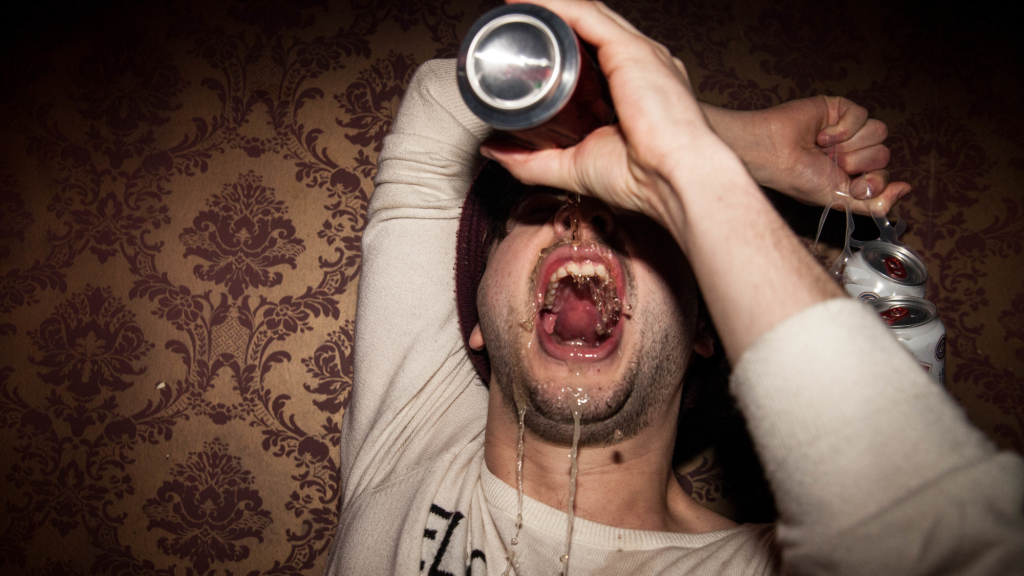
At some point during the holidays, you hit the moment. Maybe it’s the third office party, or the second hangover in a row that feels medically confusing. You swear you’ll take a break from alcohol. You mean it this time. And, according to researchers, that short pause for Dry January does far more than make you feel virtuous.
A new review from Brown University’s School of Public Health and the Warren Alpert Medical School examined 16 studies with more than 150,000 participants and found that a single month without alcohol can create effects that last long after January ends. Lead author Megan Strowger told Newsweek the data “consistently found that participants report sustained decreases in overall alcohol consumption and a reduced risk for developing alcohol use disorder for at least six months,” along with physical and mental health gains that people actually notice.
Videos by VICE
The review focused on people who cut alcohol entirely, but even those who reduced their drinking saw benefits. Participants reported better sleep, improved mood, steadier energy, healthier liver function, lower blood pressure, and easier concentration. In other words, the stuff you promise yourself you’ll fix every year but forget about by February.
Strowger said the effort “leads to sustained moderation,” and that “most participants continue to drink less alcohol rather than increasing consumption afterwards.” People who formally signed up for the official Dry January program were also more likely to finish the month and continue drinking less once it was over.
There were a few exceptions. Some participants who didn’t make it through the month described drinking more afterward, something researchers plan to examine more closely. But overall, the review found that Dry January is surprisingly effective, especially among people who identify as heavier drinkers, a group that’s often difficult to reach with intervention programs.
Suzanne Colby, professor of behavioral and social sciences, said taking a break can be framed as a positive reset rather than a punishment. She pointed to shifting cultural norms and the rise of “sober curious” spaces that make cutting back feel less isolating.
As for me, I’ve been sober, well, “Cali sober,” for almost two years. I feel better, look better, and get far more done than I did when drinking was part of every social plan. It wasn’t easy. At all. My friend group dwindled, I moved cities, and relearned how to connect with people. But the clarity was worth it. Honestly, I can’t think of one con (aside from the made-up crap you tell yourself like “But I can’t have fun without a drink!”).
If you’re thinking about trying Dry January or something longer, Annie Grace’s This Naked Mind is a game-changer. You’d be surprised how quickly “quality sleep” becomes one of the top priorities in your life.
More
From VICE
-

Photo: Anton Petrus / Getty Images -
Photo: agung fatria / Getty Images -

Huge new game reveals at the 2025 Game Awards -
Photo: Yulia Reznikov / Getty Images
