

Phantom Blade Zero is one of those games that took a while to impress me. After seeing the reveal trailer, I didn’t believe what I was seeing. And I honestly thought it had to be a pre-rendered video. But after seeing some off-screen gameplay with someone in control, it quickly captured my attention. Seeing how fast-paced and smooth Phantom Blade Zero was looking? It quickly sprung to the top of my most-anticipated games list.
After speaking with Soulframe, creator of Phantom Blade Zero, I can see that the game is in incredibly capable hands. It’s shaping up to be an excellent addition to the action genre.
Videos by VICE

As you may already know, I feared that the gameplay of ‘Phantom Blade Zero’ wouldn’t be able to live up to its lofty trailer. But hands-on gameplay proved me wrong. What measures have gone into ensuring that ‘PBZ’ plays as smoothly as it looks?
Ensuring an intuitive and seamless gameplay experience has always been our top priority. We developed the entire game with a fundamental focus on how it plays rather than just how it looks in a trailer. From our first reveal to now, all of our trailers have been made entirely from gameplay footage. Even our latest trailer for Chinese New Year was put together without any additional editing — just pure gameplay.
There’s no secret formula behind this. It comes down to a massive amount of animation work that ensures a smooth transition between movements. We designed the combat so that almost every action naturally flows into the next through a transition animation, avoiding hard cuts and sudden shifts — this is crucial for fluidity.
As a result, the number of animations in our game is far greater than it may seem. Additionally, we’ve implemented contextual execution moves, dynamic environmental interactions, and multi-target combat mechanics to enhance immersion. The richer our animation set, the more natural and fluid the movements feel. Our goal is to make the game feel like a living, playable Kung Fu movie.
Frame rate is another key factor. We’re optimizing the game to run at 2K resolution with 40–60 FPS on PS5, while PS5 Pro and high-end PCs will offer an even sharper and smoother experience. From last year’s hands-on feedback, many players felt that Phantom Blade Zero plays even smoother than it looks. The added controller haptics further enhance the experience, allowing players to feel every strike and movement in a way that trailers simply cannot capture.

You’ve compared playing ‘Phantom Blade Zero’ to driving a very fast car that feels like it’s slightly out of control. Would you like to add some additional details to these comments? Watching the game in motion, I have a better understanding of the phrase, but I’d love to hear your thoughts.
Think of sports like skiing or surfing, where your body experiences shifts between being in and out of control. The key to these activities is constantly adjusting your balance. Keeping yourself steady while pulling off amazing moves at just the right moment. The thrill comes from mastering what initially feels unstable or uncontrollable.
In Phantom Blade Zero, combat happens at an extremely fast pace. Movement is rapid, attack frequency is high, and you can perform maneuvers like running along walls, teleporting behind enemies, and executing sudden cinematic finishers that dynamically shift the camera to wide or close-up angles, making it feel like you’re in a Kung Fu movie.
During combat, you might feel a slight sense of dizziness. Not because the visuals are overwhelming but because you have to stay sharp amidst the relentless action. The challenge is to remain composed while handling enemy attacks and countering effectively. Throughout the game, you will often shift between rational thinking and pure intuition. Everything happens incredibly fast; if you lose control, failure is instant, and you’ll need to quickly reset and try again.
But if you handle the pressure, land a few perfectly timed counters, and break an enemy’s guard, that’s when the real fun starts. At that moment, you might even come up with new creative combos, pushing the battle further and taking full advantage of your enemy’s broken defense window.

In the ‘Phantom Blade Zero’ documentary you’ve released in China, you go into detail about working with Kung Fu Masters for motion capture in the game. How did this opportunity come to arise, and what challenges did you face, if any, during this process?
Our goal was to create a combat experience that is both culturally authentic and historically grounded. If we had simply gathered reference materials, created some Kung Fu-inspired animations, and applied them to an existing combat system like Ninja Gaiden or Devil May Cry, then what we produced wouldn’t truly be Wuxia (martial arts). Instead, we wanted to go beyond what Japanese and Western developers have done before.
So, we decided to explore new systems ourselves. I learned that when the French studio Sloclap developed Sifu, they conducted in-depth studies of Bak Mei Kung Fu in China. As a Chinese studio, why wouldn’t we take it even further? That’s when we started visiting legendary martial arts sects, temples, and schools across China. We worked with masters from Emei Mountain, the Shaolin Temple, Guangdong Lion Dance troupes, and several Kung Fu academies. It was an unbelievable and dreamlike journey, filled with discoveries that deeply influenced our approach to game design.
The biggest challenge wasn’t capturing these authentic Kung Fu movements. But breaking them down into fundamental gameplay mechanics and rebuilding them in a way that feels responsive and interactive. Unlike film, where fight choreography is purely visual, games require real-time player engagement and combat feedback.
We wanted players to not only see Kung Fu action but truly play it. Every move in the game reflects the authentic principles of Chinese martial arts. When you make the right decisions in combat, you’re rewarded with genuine and impactful techniques. Our goal is to ensure that players don’t just feel like they’re controlling a Kung Fu master on-screen; instead, they become one as they play, fully immersed in a world of fast, fluid, and strategic Wuxia/Martial Arts combat.
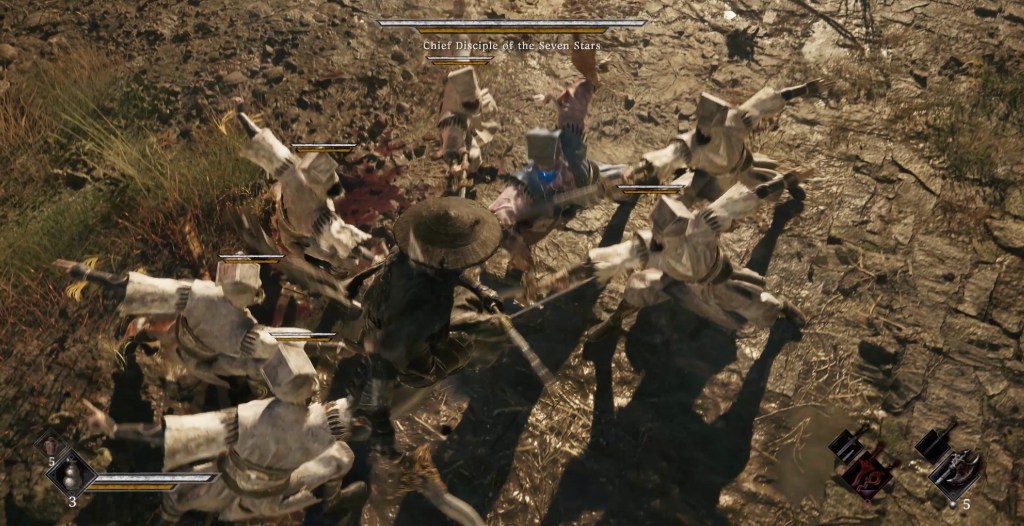
There are many references to classic Wuxia/Martial Arts films in ‘Phantom Blade Zero.’ But, one of the most apparent is the sword formation. Seeing as we’ll be facing off against many different foes, can we expect most encounters to start like this?
Throughout the game, you will experience a wide range of unique and cinematic boss battles. These bosses don’t just serve as combat challenges. They also play a key role in driving the narrative forward while delivering a blend of classic and wild visual and gameplay experiences.
I’m glad you enjoyed the sword formation fight from our Chinese New Year trailer. We have even more thrilling and creative enemies in store. For fans of Kung Fu films and novels, many of these moments may feel familiar yet fresh, as we’re bringing classic Kung Fu tropes into a game in a way that has never been done before.
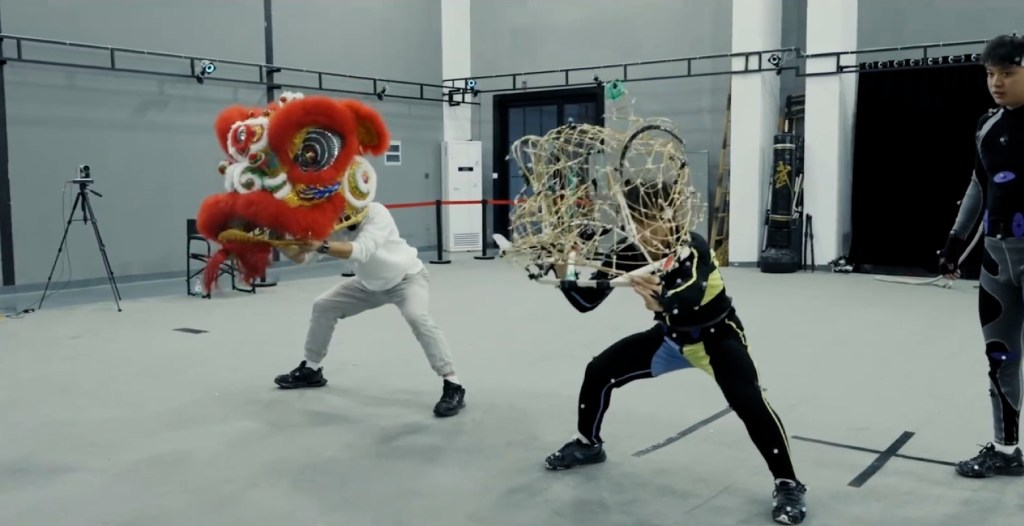
When traveling to meet up with these Kung Fu Masters, you mentioned visiting Shaolin Temples and working with Guangdong Lion Dance teams to bring the world of ‘Phantom Blade Zero’ to life. What were some of your favorite parts of this experience?
There were so many unforgettable moments on this journey. One of my personal favorites was learning Lion Dance in Guangdong. We practiced with hollow bamboo lion heads, following the master’s movements. Even with these lighter versions, we were completely exhausted by the end. The real lion heads used in performances are much heavier, requiring even more strength and endurance.
I was also fascinated by a story from one of the Lion Dance masters. He told me that, in the old days, Lion Dance troupes traveling for performances often faced the threat of bandit attacks. To defend themselves, they would hide sharp blades and spears inside the lion heads, using their movements to strike back against the bandits while protecting their team. Hearing this was truly eye-opening — it felt like a real-life example of “Kung Fu Punk.”

Does ‘PBZ’ play into the idea of Chinese Mythology, or is everything created here strictly confined within its own world? If so, what should players be keeping their eyes peeled for?
The story and world of Phantom Blade Zero are entirely original, but they are undeniably influenced by classic Wuxia novels and films. The connection is similar to how Game of Thrones is influenced by The Lord of the Rings and the Wars of the Roses — it’s not a direct adaptation, but it carries certain inherited themes and inspirations.
For example, the sword formation fight you saw in our trailer, where seven swordsmen attack in the Big Dipper constellation formation, is a classic example from Wuxia novels. Another example is the Blood Dripper, a weapon used by a boss in our demo. In legends, it was a deadly flying guillotine rumored to have been used by Qing Dynasty emperors to eliminate their enemies. This terrifying weapon has also been romanticized and dramatized in many Wuxia films from the ’70s and ’80s.

Were there any Wuxia films or other pieces of media that helped inspire the world of ‘Phantom Blade Zero’? Could you divulge and let us know what they were so we can properly prepare for its release?
There are many Wuxia films that have deeply influenced Phantom Blade Zero. Some of the classics I’ve watched countless times. For example, The Blade (1995), New Dragon Inn (1992), and Swordsman II (1992).
However, Phantom Blade Zero is not just a repetition of traditional Wuxia — it’s also influenced by many unique ideas, such as:
- Steampunk elements (mechanical components integrated into the game world)
- Cyberpunk themes (the separation and replacement of souls and bodies)
- Parallel worlds (dreamscapes that have the potential to alter reality)
Some of the works that have inspired these aspects include: Battle Angel Alita, Ghost in the Shell, Berserk, and Vampire Hunter D. These inspirations allow us to blend traditional Wuxia themes with unique, unexpected influences, shaping a world that feels both familiar and completely new.
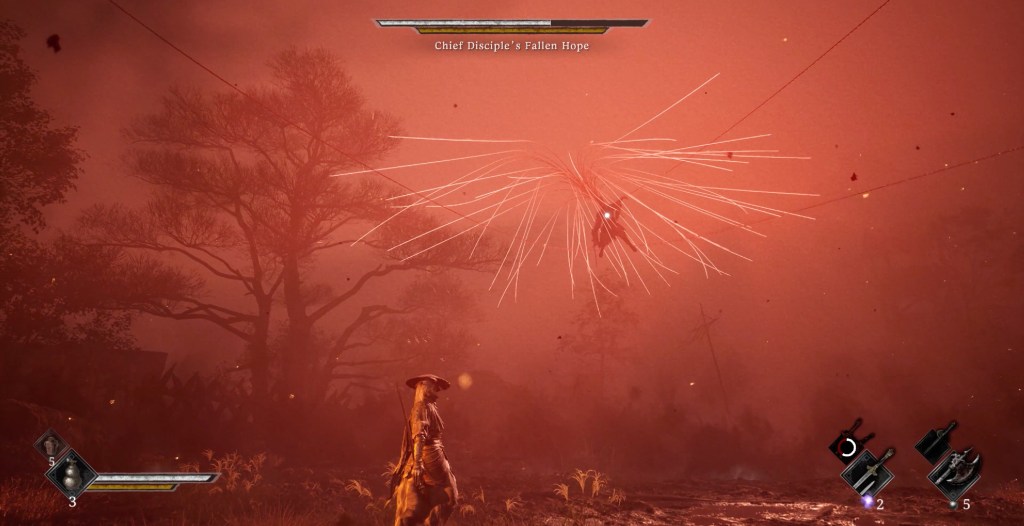
I have to admit it. I breathed a sigh of relief learning that this was going to center around combo-based attacks rather than being a Souls-like. Was it always planned to be a more straightforward action game? Or did this decision come along later in the process?
From the very beginning, Phantom Blade Zero was never intended to be a Souls-like game. However, it’s also not a traditional action game. We’ve developed a completely new combat structure that blends elements of exploration-driven gameplay (like Souls games) with fast, fluid action combat.
The game features deep progression mechanics, extensive collection elements, and a complex narrative far beyond typical action games. Its predecessor, Rainblood: Town of Death, was actually a turn-based RPG. Phantom Blade Zero includes side quests, multiple endings, weapon upgrades, skill trees, and a layered, multi-dimensional world map. Making it quite different from a pure hack-and-slash experience.
We didn’t follow any existing genre formula — instead, we built our own system from the ground up.
Most importantly, Phantom Blade Zero will be accessible to all players. There’s an easy mode that allows even those new to action games to complete the story smoothly, but for seasoned players, there’s an extreme difficulty mode that is even tougher than most Souls-like games. The high-speed, visually intense combat you see in our trailers is actually achieved with just a few simple button presses — there are no complex combos or special input commands. However, the game still offers a progressive learning curve and a deep level of mastery, allowing players to refine their skills and push the combat system to its limits.

‘Phantom Blade Zero’ is both visually stunning and looks incredibly smooth in motion. Did using Unreal Engine 5 help in this process? Or what steps have you taken to ensure it looks as fantastic as it does?
Unreal Engine 5 is an incredible tool that enables teams like ours to achieve top-tier visual quality while reducing time spent on lower-level technical groundwork. This advantage allows us to focus more on pure content creation. We are fully confident in our ability to compete at the highest level of content development. There are also a few unique factors that have helped us achieve the distinct look and feel of Phantom Blade Zero:
1. Since we are developing the game in China, we have direct access to an extensive network of elite Kung Fu masters and stunt performers. We often have multiple highly skilled martial artists performing in a single motion capture session. Which allows us to capture incredibly detailed and complex combat animations. When you accumulate a vast amount of high-quality animations, the way they interact and blend creates an extraordinary visual and gameplay experience — all while keeping production within a manageable budget.
2. We conduct large-scale scans of real-world objects. Which include everything from massive temple structures and small village homes to individual weapons and props. By carefully combining these high-resolution assets with unique artistic direction and meticulous lighting, we can create an incredibly convincing and immersive visual experience.
At the core of it all, our ultimate goal remains the same — to create a Wuxia game that feels like a playable Kung Fu movie. Every design decision we make serves to bring that vision to life.

I know players are eager to get hands-on with this one as soon as possible. Will this game be playable at any upcoming events, or are there plans to release a public demo?
In 2024, we held six hands-on demo events worldwide, where over 12,000 players had the chance to experience the game. We absolutely want to provide more opportunities for players to get a hands-on experience. But the exact details will depend on our event partnerships and scheduling.
Beyond large-scale public events, we will also hold private gameplay sessions. Where select media outlets can have hands-on time before the official release. If we plan any additional opportunities like this, we’ll be sure to keep you updated!
I would like to take this opportunity to thank Soulframe, CEO of S-GAME and the creator of Phantom Blade Zero, as well as Will Chen, Head of Publishing of S-GAME, for taking the time to speak with me about the upcoming Phantom Blade Zero.
More
From VICE
-

Kevin Trimmer/Getty Images -

Elva Etienne/Getty Images -

CHUYN/Getty Images -

LUIS ROBAYO/AFP via Getty Images
