

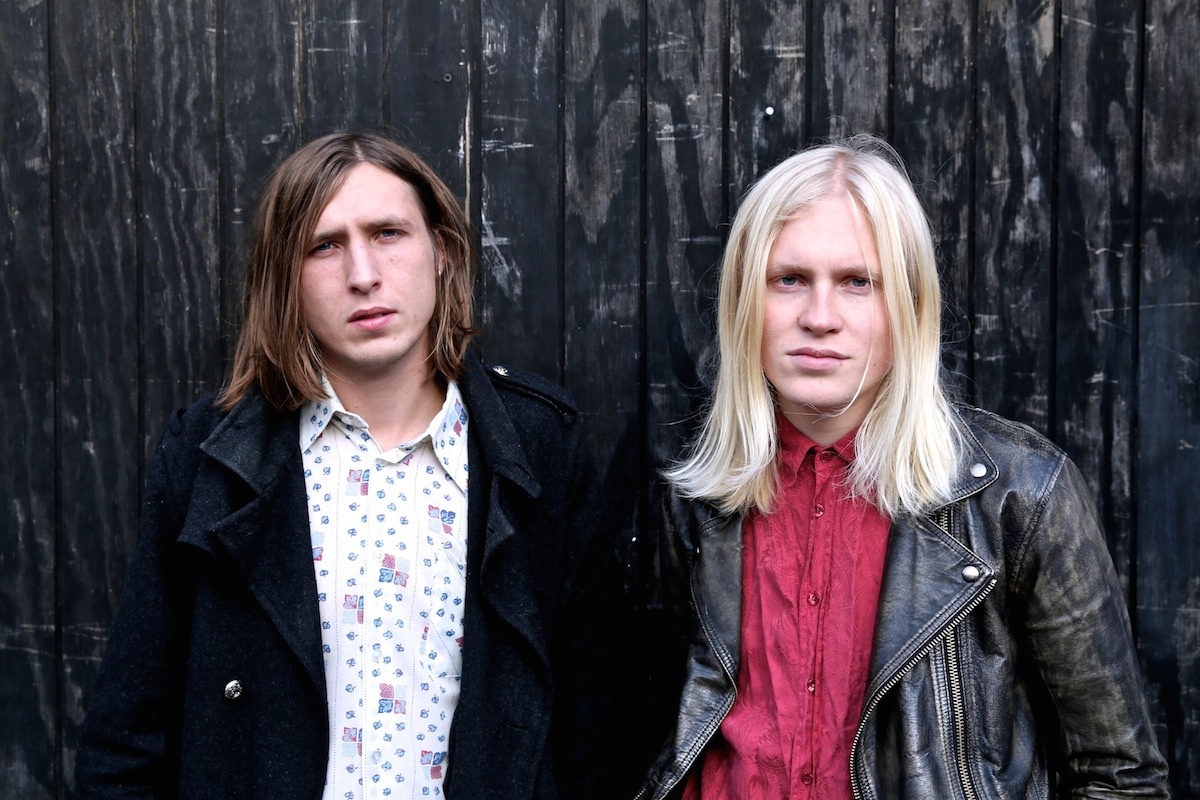
The Wands is a Copenhagen-based band made up of Christian Skibdal and Mads Gräs — longtime friends who are pretty much experts at transporting their listeners back to the 60s with their particular brand of psychedelic rock. Their music is about as classic as it gets; and although you could slap a revivalist label on these guys, The Wands are so much more than that—mostly because it’s obvious they’re actually really fucking talented. We caught up with them ahead of a 35-day European tour in support of their latest LP, The Dawn, released Novemeber 3rd.
VICE: So, a 35 day tour. Where are you heading first?
Mads Gräs: We’re going to London.
Videos by VICE
What’s it like playing in London? I’ve heard that England has more of an appreciation for psych music compared to many other places in Europe.
MG: British humour is very similar to Danish humour, so we always have a big laugh. The irony and the sarcasm are the same!
Tell me about your record. You guys are pretty vocal with your emphasis on being a truly psychedelic band, for example. Why is that such a focal point for your music and this record?
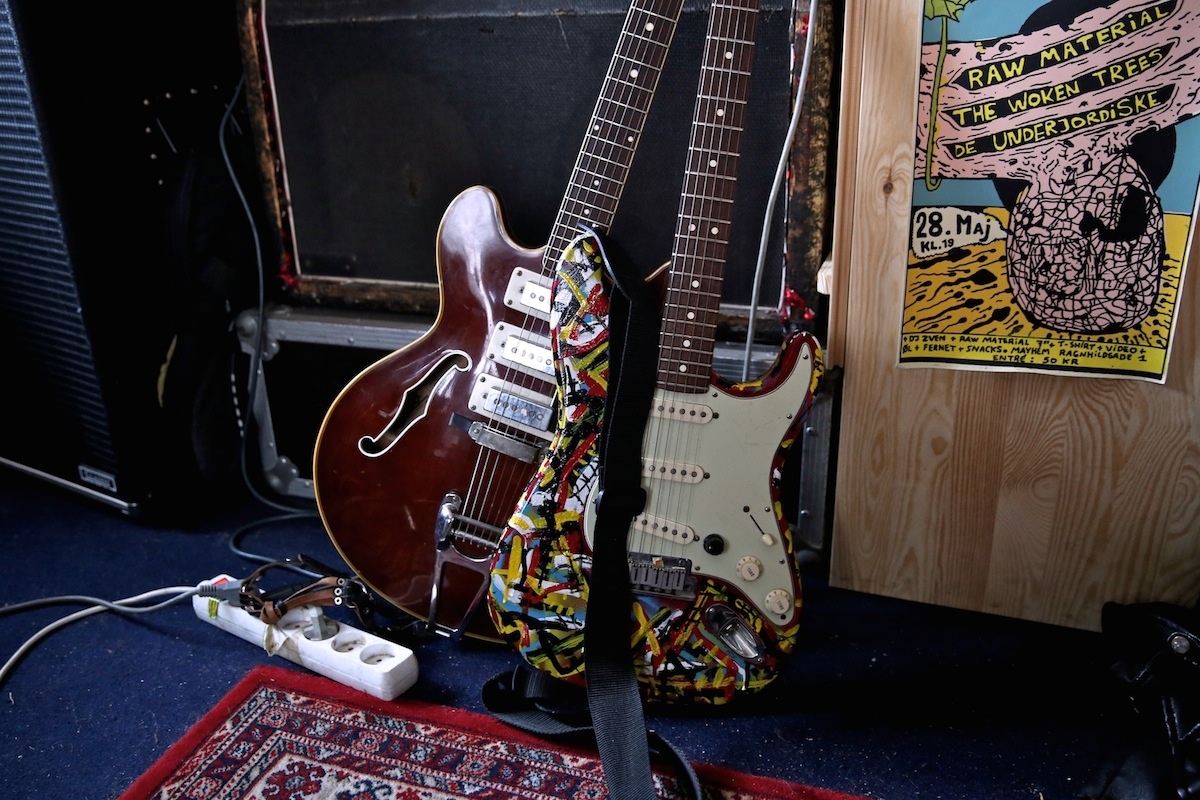
Christian Skibdal: This latest record has a lot of references that are very obvious. It’s like something fifteen year old Mads and Christian would enjoy. And we really like the 60s psychedelic soundscape. Old pedals and tape delays and stuff like that. It’s all good fun.
MG: I don’t know if it’s a goal in itself to be psychedelic—we just want to write good rock music. And psychedelica is a good way to express yourself—you can take it to the border musically.
Is that something you started with and strengthened as you went along, or did you have a different set of influences you were driven by in the beginning?
CS: We started out being super focused on the psychedelic part and then it got more honest, in a way.
MG: The way it’s produced now is much more organic. Our first EP was produced over a long time with lots of techniques, samples and overdubbing. The album, The Dawn, is recorded on top of some live recordings. So it’s alive; you can hear that it’s analog.
These days, it seems like quite the investment to try to do something strictly analog. Why did you decide to go in that direction this time?
MG: I think with lots of music today, you can hear that it’s tracked to a metronome. It sounds very cut. I think it’s more interesting to listen to a record that is alive.
As far as other bands who are making similar music in Denmark, are you noticing other people also gravitating towards this analog approach?
CS: People are getting more radical, I think. They’re either very analog or very digital. But there are a lot of people doing this analog thing. It’s like a religion.
What was the most challenging part of making an analog record in ten days?
CS: The mixing. You can’t save an analog mix — if you wanted to make a new mix, you would have to start all over again. Where as most people mixing digitally would spend a month on little edits here and there, we can only spend two hours on each song at a time.
I’ve heard that the live show is almost as important now as it was in the 60s, because people consume music differently these days — a lot of people won’t listen to an album from beginning to end, for example. Do you guys think about that, or consider how your live show can really express The Wands?
CS: The live show is who we are. It’s really hard to record music and get it the way you want with the money and time you have. Live, you can just do your thing.
MG: It’s what it’s all about, playing music, communicating with our audience.
What’s one of the craziest live shows you’ve played?
CS: Leipzig. It was one of the first shows we played outside of Denmark, and our first show in Germany. We played in this goth, weird East German thing. This weird part of town was like The Texas Chainsaw Massacre. It felt like you had taken a wrong turn or something.
What was the crowd like?
CS: It was just a freak show. Like, crazy people wearing leather and massive platform shoes. Some were just straight up punk.
MG: But it was great fun.
CS: It was the weirdest place. I remember the next morning we woke up in the middle of a yoga session. We were sleeping in this room, totally wasted — and we woke up and there were just a bunch of people doing yoga or zumba or something.
Another thing I was curious about is your songwriting. Your lyrics are pretty psychedelic. What’s your songwriting process?
MG: We start with a riff or something and then work afterwards to see what happens. We are still trying to figure out our process.
CS: But it’s different every time, when you write songs. There isn’t a golden way to do it — it’s just hard work.
Why do you guys choose to write songs exclusively in English?
CS: I love English cliches. You can sing lighter stuff! And in Denmark you have to be all pretentious and artsy about it if you want it accepted.
MG: I like that Christian’s texts are in English, because I’ve always been listening to English music, so it’s very natural for me.
CS: Some songs just don’t work in Danish. “Smoke on the Water” in Danish — not so much. There is a really strong tradition for Danish psychedelic music and bands singing in Danish in the 60s and 70s — a lot of bands are doing that revival thing in Copenhagen and Aarhus. We love it, but it’s not us.
Okay, that’s good for me, seeing as I don’t really speak Danish. Is there anything else you want to add?
MG: Are you going to review our record in this?
Nope. Criticism is kind of funny these days anyways, like when you read horrible reviews. For example, Pitchfork reviewed Blonde Redhead’s last album and called it “a cold fish of a record, dead-eyed and clammy.”
CS: I woke up this morning and the first thing my flatmate said was, “Hey, Christian, you got a shitty review!” Some guy thought I wrote a shitty penis metaphor. That’s how it is sometimes, I guess.
I guess. Thanks a lot guys.
More
From VICE
-

Amr Bo Shanab/Getty Images -

Scottproj/Getty Images -

Screenshot: WikimediaCommons -

Tim Mosenfelder/Getty Images
