

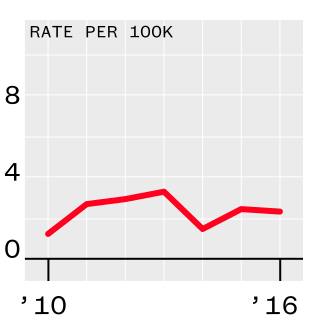
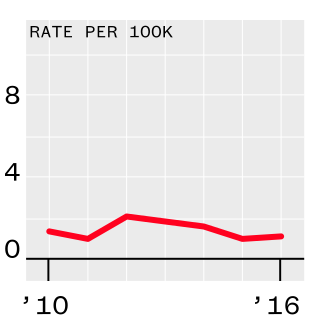
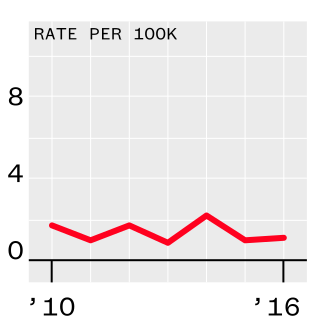
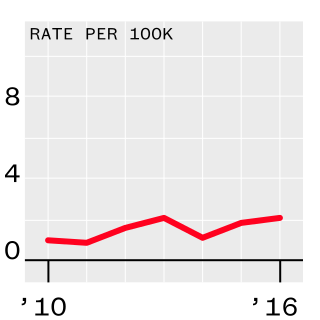
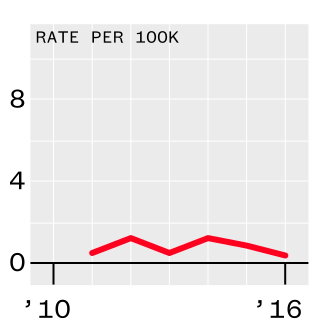
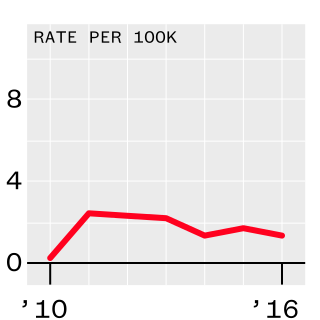
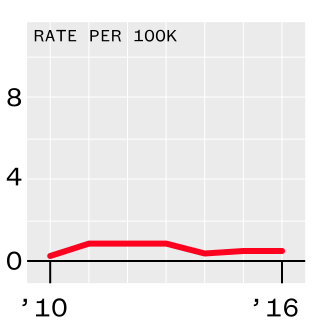
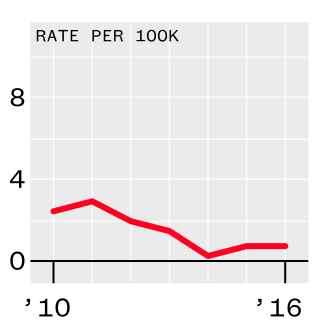
VICE News spent nine months collecting data on both fatal and nonfatal police shootings from the 50 largest local police departments in the United States. For every person shot and killed by cops in these departments from 2010 through 2016, we found, police shot at two more people who survived. We also found that 20 percent of the people cops fired on were unarmed.
We’re making the data public so that others can explore it too. Find your local police department and download the data below. And if you use our data, we’d love to hear about it. Let us know on Twitter, Facebook, or Instagram, or email policeshootings@vice.com.
Videos by VICE
Download data for individual departments below.
See the code we used to analyze the data on GitHub.
We started with the 50 largest departments because they employ the most police officers, nearly 148,000 total. Altogether, they serve 54 million Americans. Most of our data was sourced directly from law enforcement agencies and district attorneys, though we also sometimes relied on local media reports. We acquired data on several Texas departments from the Texas Tribune.
Sometimes, all we needed to do to get records of police shootings was to ask. Police departments in Austin, Texas, and Cincinnati, Ohio, for example, kept nearly complete records of shootings online and responded quickly to our requests for more information.
Other agencies were less transparent.
The Detroit Police Department said it would take up to 3,120 business days and cost at least $77,532 to retrieve records that other departments made available online for free. An official in the Essex County District Attorney’s Office told us that Newark police likely didn’t keep a list of officer-involved shootings so that they could charge reporters fees to retrieve the case files. The Memphis Police Department required a Tennessee resident to file the records request, then asked for $3,300 unless the documents were reviewed in person at police headquarters.
Every agency tracked different information on individual shootings. Most departments tracked when and where a shooting took place, how many people were involved, and whether anybody died. But others kept surprisingly scant records. For example, following the 2014 events in Ferguson, most reports on fatal shootings from the St. Louis Police Department contained no information other than the location and the date when the incident occurred.
Ultimately, we obtained some data from 47 departments — with 4,117 incidents in all. Departments in New York’s Suffolk and Nassau Counties didn’t provide us with any data. Maryland’s Montgomery County Police Department gave us only partial incident-level information and no total number of police shootings, so we excluded them from the analysis.
We put all this information together to analyze trends across the departments and to compare them with one another — the first time this has ever been done for both fatal and nonfatal shootings.
Many departments did not provide information on the events that led to the shooting or whether the victim was armed. Some didn’t supply whether an incident was fatal or not. When possible, we read the narratives in these cases and categorized each incident by hand. We also gathered information from additional media sources, such as the Chicago Tribune’s officer-involved shootings database. When the circumstances were unclear, we marked those fields “unknown.”
In most cases, our data sources provided demographic information that we could use directly. For some cities, departments used different racial categories than we did. In such cases, we manually reassigned races, leaving ambiguous groupings as “unknown.”
We split each incident into a separate record for analysis on individual civilians. In cases where we didn’t know how many civilians were involved in a shooting, we assumed there was one.
Sometimes incidents involved multiple civilians, but police departments only included information about one weapon. In these cases, we assumed that every civilian involved was armed with that weapon. We broke down weapons into five categories: firearms, knives, replica or imitation guns, “other,” and unarmed. Firearms included any gun that fires bullets, and, in two cases, grenades. Knives also included weapons like swords, machetes, and axes. The replica group included toy guns and all guns that fired anything other than bullets, including BBs, paintballs, pellets, and other projectiles.
The term “other” was used as a catch-all for additional weapons, from vehicles to rocks to walking sticks. In incidents where a civilian had multiple kinds of weapons, we counted the most dangerous one. (We ranked danger in the following order: firearms, knives, replicas, “other,” and unarmed.) In a handful of incidents, officers said people were armed with their “fists” — literally armed with their arms. We marked that as unarmed.
In cases of “suicide by cop,” we included the incident in our analysis if the civilian was shot by police. If the civilian’s wounds were self-inflicted, however, we removed them from our data. We also excluded accidental discharges when no civilian was hit and shootings of animals, such as one case in Tampa, Florida, that involved an aggressive alligator. Finally, we excluded shootings committed by officers from other agencies — for example, the U.S. Marshals or state police — when they occurred within the jurisdiction of one of the top 50 departments.
Ultimately, we were sometimes forced to make subjective decisions: If an officer says a subject was reaching for his gun, is the subject “armed”? What if the gun was found at the scene after a shooting? We decided each of these murky cases on an individual basis.
We also accepted the official police version of events as true, though such accounts have been disputed in the past.
You may disagree with our methodology — so we’ve provided both standardized and original versions of our data from each department.
You can use this data to analyze officers, break down police shootings city by city, or just read through the 1,813 narratives of police shootings we collected.
New Mexico

Years: 2010-2016
Standardized data
Raw data
Source: Albuquerque Police Department

Texas
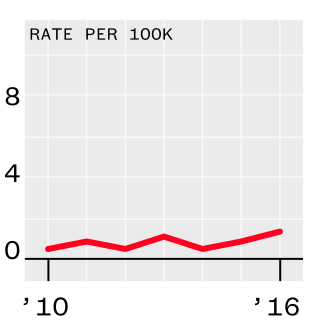
Years: 2010-2016
Standardized data
Raw data
Source: Austin Police Department, Texas Attorney General
Maryland
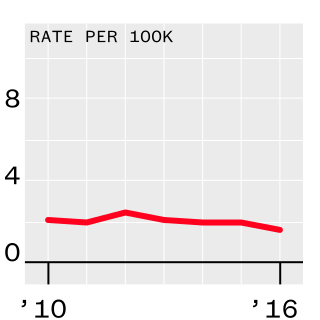
Years: 2010-2016
Standardized data
Raw data
Source: Baltimore Police Department
Maryland
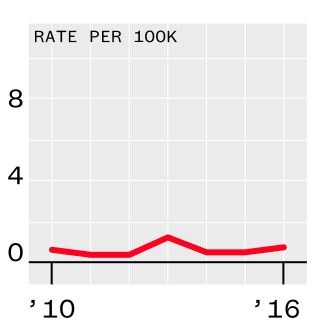
Years: 2010-2017
Standardized data
Raw data
Source: Baltimore County Police Department
Massachusetts
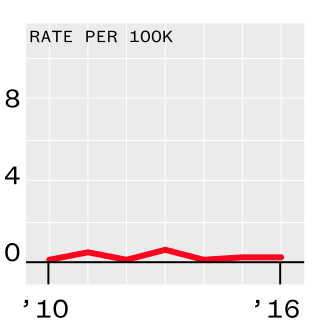
Years: 2010-2016
Standardized data
Raw data
Source: Suffolk County District Attorney’s Office, Boston Police Department, local media
North Carolina
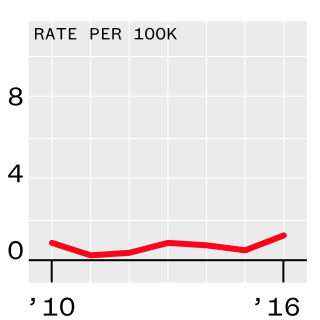
Years: 2010-2016
Standardized data
Raw data
Source: Charlotte-Mecklenburg Police Department
Illinois
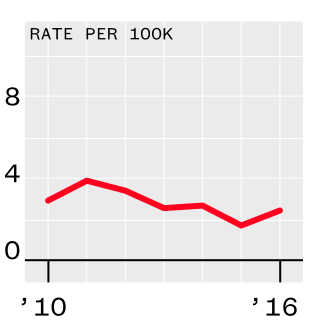
Years: 2010-2016
Standardized data
Raw data
Source: City of Chicago, Civilian Office of Police Accountability, Chicago Tribune
Ohio
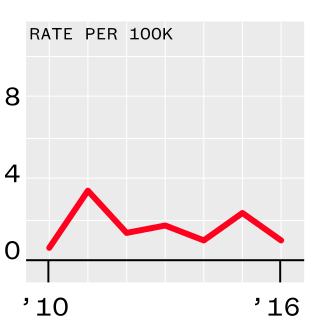
Years: 2010-2016
Standardized data
Raw data
Source: Cincinnati Police Department
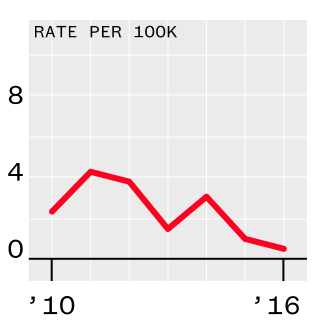
Georgia
Years: 2010-2016
Standardized data
Raw data
Source: Dekalb County Police Department
Colorado
Years: 2010-2016
Standardized data
Raw data
Source: Denver Police Department, Denver District Attorney

Texas
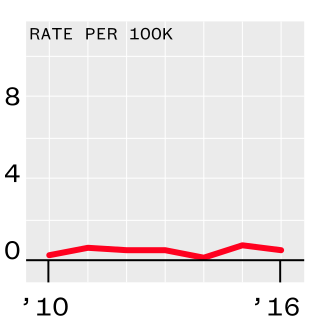
Years: 2010-2016
Standardized data
Raw data
Source: Texas Tribune, Texas Attorney General, El Paso Police Department
Virginia
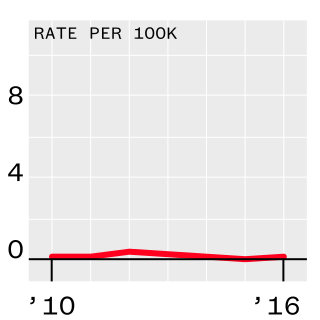
Years: 2010-2016
Standardized data
Raw data
Source: Fairfax County Police Department
Texas

Years: 2010-2016
Standardized data
Raw data
Source: Texas Tribune, Texas Attorney General
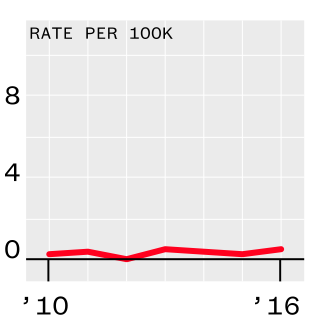

Indiana
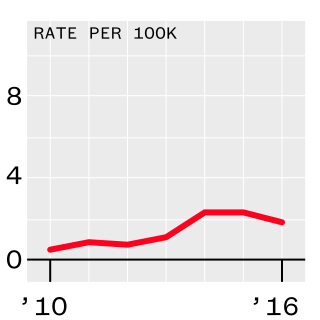
Years: 2010-2016
Standardized data
Raw data
Source: Indianapolis Metro Police Department, the Indianapolis Star
Florida
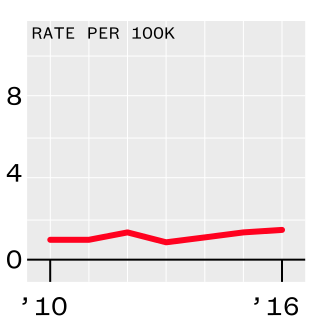
Years: 2010-2016
Standardized data
Raw data
Source: Jacksonville Sheriff’s Office, the Florida Times-Union
Missouri
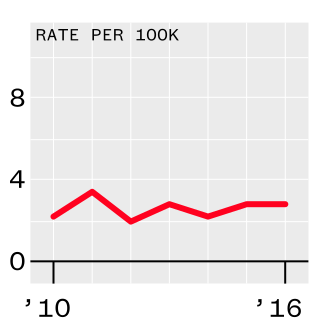
Years: 2010-2016
Standardized data
Raw data
Source: Kansas City Police Department
Nevada
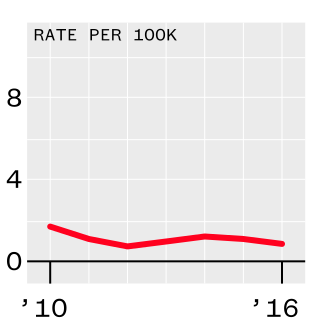
Years: 2010-2016
Standardized data
Raw data
Source: Las Vegas Metropolitan Police Department
California
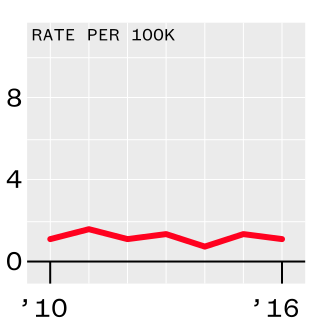
Years: 2010-2017
Standardized data
Raw data
Source: Los Angeles Police Department
Kentucky
Years: 2011-2016
Standardized data
Raw data
Source: Louisville Metro Police Department
Florida
Years: 2010-2016
Standardized data
Raw data
Source: Miami-Dade State Attorney’s Office
Florida
Years: 2010-2016
Standardized data
Raw data
Source: Miami Police Department, Miami-Dade State Attorney’s Office
Wisconsin
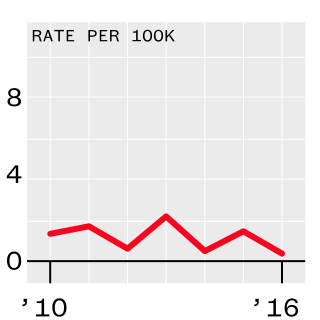
Years: 2010-2016
Standardized data
Raw data
Source: Milwaukee Police Department
Tennessee
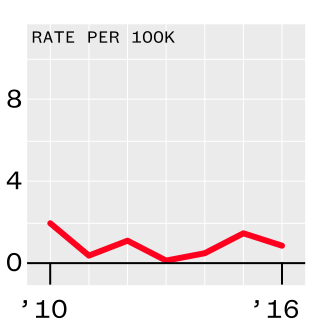
Years: 2010-2016
Standardized data
Raw data
Source: Metropolitan Nashville Police Department

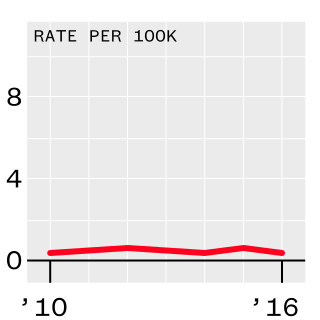
New Jersey
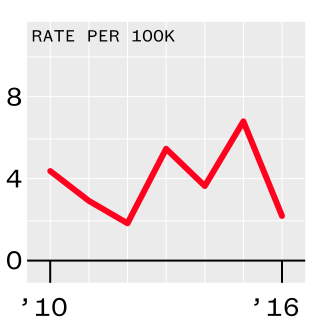
Years: 2010-2016
Standardized data
Raw data
Source: Essex County District Attorney’s Office
Pennsylvania

Years: 2010-2017
Standardized data
Raw data
Source: Philadelphia Police Department

Oregon
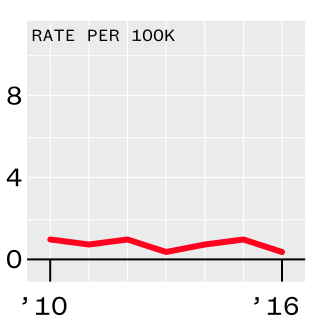
Years: 2010-2016
Standardized data
Raw data
Source: Independent Police Review, Office of the City Auditor, Portland Police Bureau
Maryland
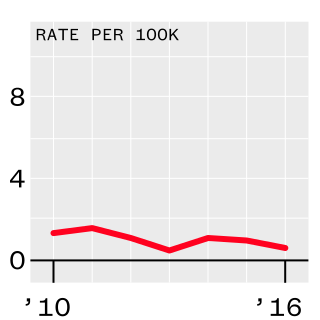
Years: 2010-2016
Standardized data
Raw data
Source: Prince George’s County Police Department
Texas

Years: 2010-2016
Standardized data
Raw data
Source: Texas Tribune, Texas Attorney General
California
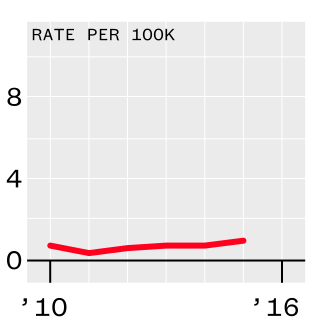
Years: 2010-2015
Standardized data
Raw data
Source: San Diego Police Department
California
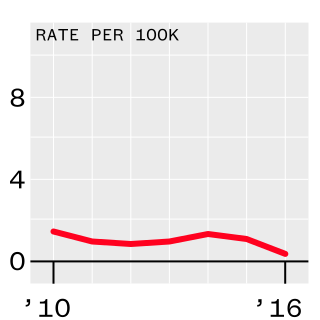
Years: 2010-2016
Standardized data
Raw data
Source: San Francisco District Attorney’s Office, San Francisco Police Department, local media
California
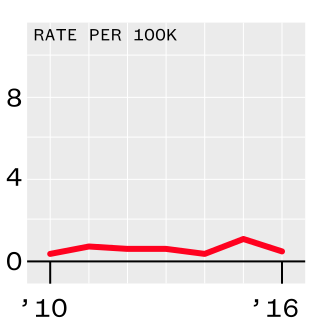
Years: 2010-2016
Standardized data
Raw data
Source: San Jose Police Department
Washington
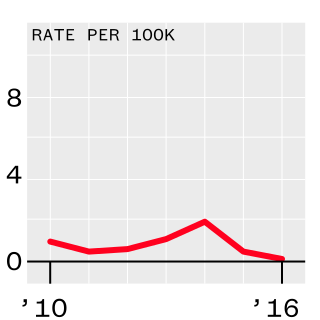
Years: 2010-2016
Standardized data
Raw data
Source: Seattle Police Department
Missouri
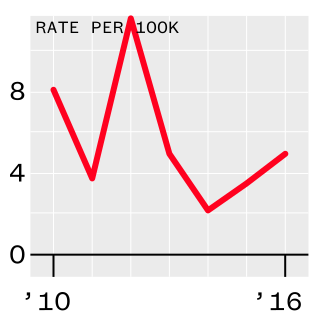
Years: 2010-2016
Standardized data
Raw data
Source: St. Louis Metropolitan Police Department, local media
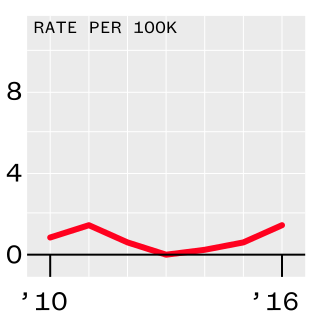

District of Columbia

Years: 2011-2016
Standardized data
Raw data
Source: Metropolitan Police Department of the District of Columbia
Our data is far from comprehensive. There are about 18,000 law enforcement agencies in the United States. If you want to learn more about police shootings in your community, check whether a department has an open data portal or if a local news outlet already publishes a list of police shootings. If neither of those options exists, ask your department’s public information officer and the local district attorney about “officer-involved shootings.” Officials may give you the information, direct you to published departmental reports, or advise you to file a public records request.
Data on police department size from Bureau of Justice Statistics.
Population and race data from the 2013 American Community Survey.
Shot by cops and forgotten
Life after deadly force
Rob Arthur,Taylor Dolven,Keegan Hamilton,Allison McCann,
andCarter Sherman reported and wrote this story.
Kathleen Caulderwood produced the videos.
Morgan Conley,Josh Marcus, andDiamond Naga Siu contributed research and reporting. Adam Arthur and Dylan Sandifer contributed research.
Illustrations by Xia Gordon. Design byLeslie Xia. Graphics byAllison McCann.
Read more about how we collected and analyzed the data.
