

A couple of months ago I sat in my kitchen and pressed play on “Alors on Danse”, a track that Kanye West remixed back in 2010. Danceable, and the sort-of thing that would be played in a club where people drink blue VKs rather than swallow blue pills, it sounded like a strange thing for Kanye West to jump on.
I’m a sucker for anything that makes me feel like the world is not crashing at my feet, but when my Russian housemate walked into the room, she gave us a strange look, and asked us why we were listening to Stromae.
“Stromae”, she said, “is like, the biggest thing in Europe”. I didn’t believe her, mostly because she sits inside her bedroom drawing pictures of bridges and listening to Balearic singer-songwriters; but also because I’m living a vague life as a ~music journalist~ and I felt amazed that “the biggest thing in Europe” had managed to escape my glance.
A couple months later we premiered a song by Stromae on Noisey. It was a remix to his single “Papoutai” which, like “Alors on Danse”, had enlisted the help of a rapper – Angel Haze. Looking on his YouTube, I was pretty surprised. The original version of “Papoutai”, had clocked up over 130 million YouTube plays in under a year – double what Justin Timberlake and JAY Z’s “Suit and Tie” achieved in a longer period. A singular thought ran through my brain – who the fuck is this guy and how do I talk to him?
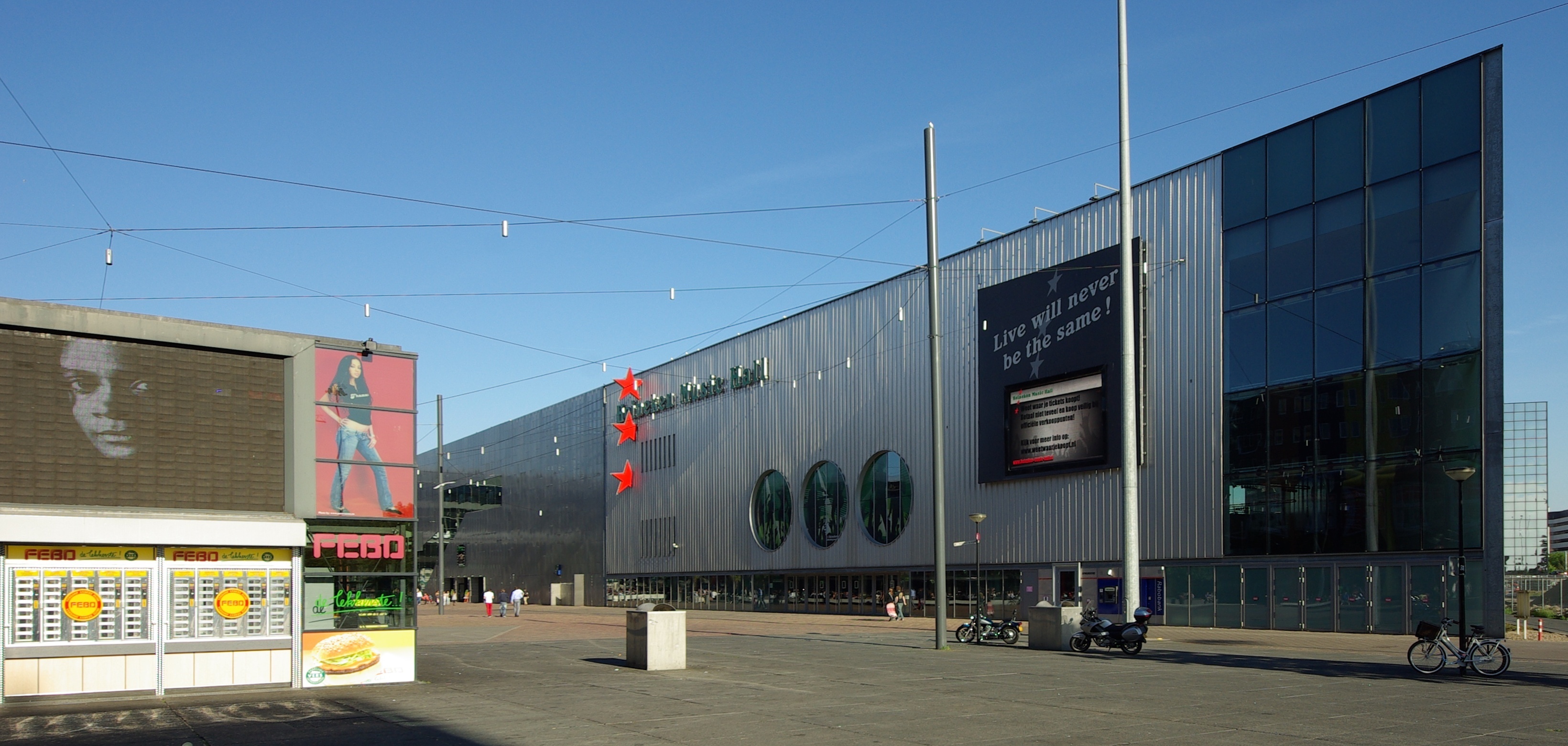
A few days later and as luck would have it, I’m in Amsterdam—backstage at the 5,500 capacity Heinekken Hall—a venue that Strome is playing that evening. Behind me, a culinary crew begin to engineer dinner. To my left, a table is stacked with various cheese, nibbles, pizza-flavoured crisps, and weird boiled sweets that only exist in mainland Europe or as a treat at the end of GCSE French.
A young man enters the room. “Would you like a drink? Can I get you anything?”, he asks, beckoning toward a fridge colonised with Coke Lite. I decline, he smiles, and vacates shyly toward a pinball table. This gentleman—dressed in a colour co-ordinated outfit that would make Scott Schuman whip out his camera— is Stromae. And, despite carrying his MTV award through the hallway only seconds earlier, he benevolently refuses to act like Europe’s biggest export.
I’m interested to find out if he thinks that European artists can only be huge in Europe, and if he thinks it’s hard for them to break the UK.

“It’s hard, but not impossible! I don’t want to have success to have success. I do my music for me, second for my entourage, and at the end, for the people. It’s healthy to work that way. But I don’t want to hear people saying it’s not possible because the UK is an English speaking country – we used to listen to English music and dance to it. And you can do the same.”
So why hasn’t Stromae quite made the same impact in Britain as he has abroad, “It’s more about music, it’s not about studies. It’s about culture. The last thing an Englishman wants to hear is a man from Brussels trying to imitate his language – you want to hear a different point of view. You may not be able to understand the details, but you can understand the feeling. I wasn’t proud of my language before but people showed me that yeah, it’s French, but you can dance to it.”
“English singers, and the community, I wish they understood that. It’s not that we cannot be understood if we sing in front of people, it’s that we have to trust in different cultures, and we have to be proud.”
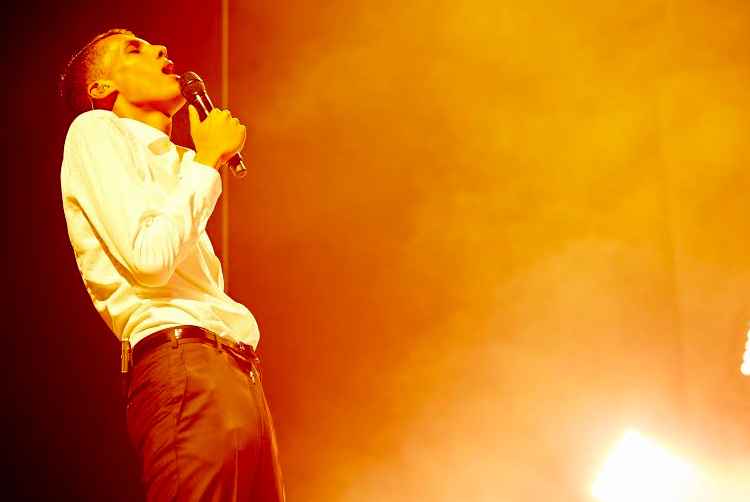
He makes a good point. We talk about a bunch of other stuff: “Alors on Danse” was created while he interned at a radio station, where it received it’s first play; his name means maestro because, in Parisian slang, words will be split into two-parts and switched around; and he thinks that British people are beautiful in the same way I find Spanish girls beautiful.
Stromae is from Belgium, but his success is felt across the whole of Europe, evident at tonight’s show in Holland. Like many Euro artists, he has an appeal that stretches far beyond a concreted demographic that cares about what clothes you wear, or who you associate with. Children in mismatched Lacoste polos; girls imported direct from an oil-brush painting; stoned college students; boozed-up lads; mothers; every type of cultural group in Amsterdam is in attendance. It’s the European equivalent to watching, say, Blur, an artist that people of all ages and social groups will get behind.

It’s easy to see why everyone is here – the show itself is slick. The lighting is reminiscent of Daft Punk as mid-set, a translucent curtain falls down in front of the band members, emphasizing their silhouettes on stage. Out front, smoke trails envelope the room, perpetuating an atmosphere that keep the band playing for almost two-hours. No one leaves early.
When I unknowingly showed my friend Stromae, we both may not have cared beyond the Kanye West feature – and that’s the point. If Stromae achieves the same success in the United Kingdom, he will still always be Europe’s homegrown baby, appealing to them because it does not feel borrowed in the way that Western artists do. Later this year he will return to Holland, this time playing at a 13,500 capacity venue; almost as big as London’s O2 Arena. If that’s not a cemented example of his stratospheric rise to Europe’s biggest darling, I’m not sure what is.
Follow Ryan on Twitter: @RyanBassil
More
From VICE
-

Milana Vayntrub/Getty Images -

Tunart/Getty Images -

JImi Hendrix holding a single (Photo by The People/Mirrorpix via Getty Images) -

F.J. Jimenez/Getty Images
