
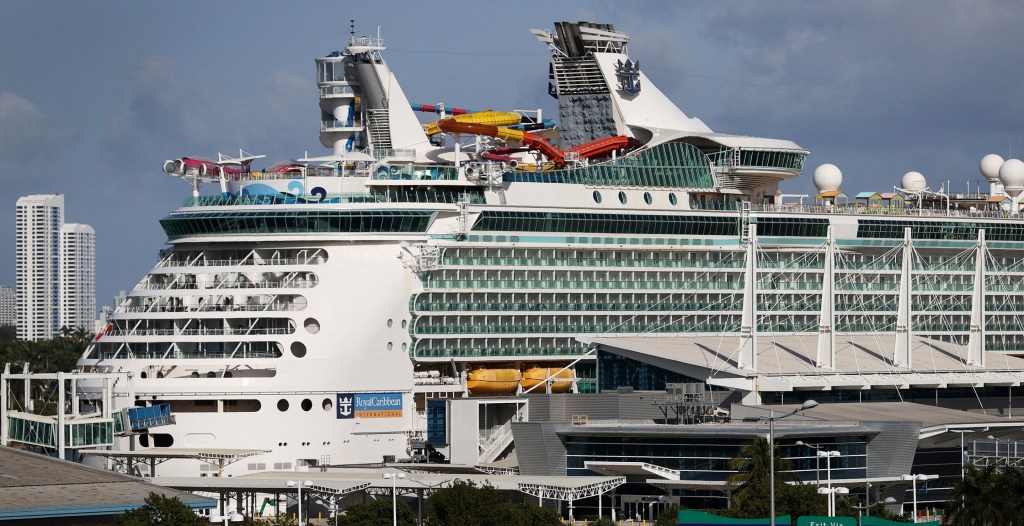
Cruises market themselves as floating escapes, a place to forget the real world while someone else handles literally everything else. What they don’t advertise is how those logistics work when someone dies onboard. A brutal wrongful death accusation against Royal Caribbean is now forcing that reality into public view.
According to the suit, 35-year-old California passenger Michael Virgil died after being served an extreme number of alcoholic drinks during a voyage. His family alleges that crew members placed his body in a walk-in refrigerator instead of the ship’s morgue and ignored pleas from his fiancée, Connie Aguilar, to return to port. The case has raised broader questions about how cruise lines handle death at sea and who gets access to the truth.
Videos by VICE
Maritime experts told the New York Post that large cruise ships have morgues hidden on the lower decks. They’re cold rooms lined with shelving, kept far from passenger spaces, and designed to hold bodies until the vessel reaches a port equipped to manage them. Ships also stock body bags and follow internal procedures that include coded announcements to avoid panic.
But morgues aren’t limitless. Cruise ship performer Dara Tucker went viral in 2024 after claiming that surprise “free ice cream parties” sometimes signal that the morgue is full and bodies may be moved to walk-in freezers. Her warning resurfaced once Virgil’s case became public, fueling debate over how often ships rely on improvised storage.
What Happens If You Die on a Cruise Ship?
The legal terrain is even murkier. Florida attorney Keith Brais, who specializes in maritime injury and death cases, explained that cruise companies aren’t obligated to release the findings of their internal investigations. He said deaths can be framed as “natural causes” even when surrounding details raise concerns. While the Cruise Vessel Security and Safety Act requires certain crimes to be logged, transparency remains limited.
Alcohol was a major factor in Virgil’s final hours. An autopsy obtained by Daily Mail reported a blood alcohol level between 0.182 and 0.186 percent, more than twice the legal driving limit. The National Library of Medicine notes that fatal intoxication typically exceeds 0.40 percent, but lower levels can still be lethal when combined with restraint, dehydration, or sedatives.
The lawsuit alleges Virgil had been served as many as 33 drinks before he became disoriented and combative. Crew members reportedly forced him down, held him under their weight, pepper-sprayed him, and injected Haloperidol. The Los Angeles County Medical Examiner ruled his death a homicide, citing cardiopulmonary arrest and the conditions of restraint.
The lawsuit will determine whether Royal Caribbean mishandled Virgil’s death. What’s very clear is that once a ship leaves shore, the systems in place for emergencies are mostly invisible to the passengers living above them. Stay safe out there.
More
From VICE
-

Samuel J Coe/Getty Images -

Pokemon GO's Holiday Part 1 event 2025 -

Screenshot: Embark Studios -

