

When a film ends and the screen fades to black, the story ends with a certain irrefutable finality. When filmmakers invert the norm, however, and end on a wash of white, what follows can be wholly enigmatic. In his latest supercut, Fade to White, filmmaker Jacob T. Swinney, who in the past analyzed film endings previously with his First and Final Frames supercut, compiles the bleached-out conclusions of thirty-one films, investigating the effects of this unconventional transition.
“What does it mean when a film fades to white?” Swinney postulates in his new video’s description. “When a film ends with the more traditional fade to black, there tends to be a sense of closure. On the other hand, ending with the much less common fade to white seems to create a sense of ambiguity.”
Videos by VICE
So is it representative of death, or a new beginning? What do you think? Watch Fade to White, and then let us know in the comments below:
Fade to White from Jacob T. Swinney on Vimeo.
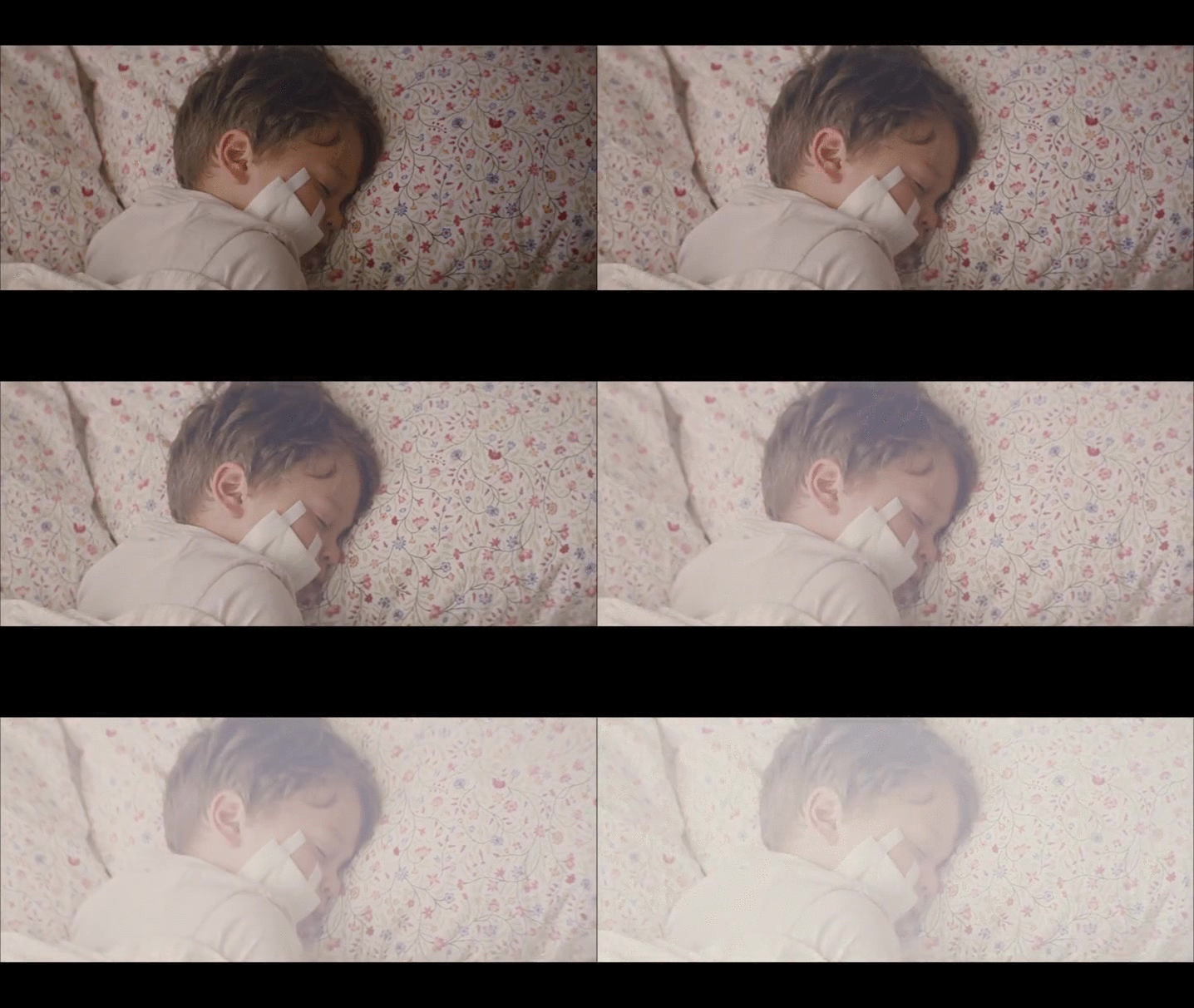
Looper
Watch more of Jacob Swinney’s work on Vimeo.
Related:
Supercut Pairs First and Final Frames of 55 Films
More
From VICE
-

(Photo by Nina Westervelt/WWD via Getty Images) -

OSLO, NORWAY – JUNE 28: Dave Mustaine from Megadeth performs on stage at the Tons of Rock festival on June 28, 2025 in Oslo, Norway. (Photo by Per Ole Hagen/Redferns) -

Niels van Iperen/Getty Images -

Hitchhiker Courtney speaks with VICE Culture Club host Jackson Garrett
