

Murray Cammick is responsible for introducing New Zealand, and the rest of the world, to local artists like Shihad, Upper Hutt Posse, Head Like A Hole, and Moana & The Moa Hunters. He released New Zealand music on his record labels, played it on his various radio shows when practically no-one else would, and interviewed and photographed musicians for a variety of magazines, most notably Rip It Up magazine which he co-founded in 1977.
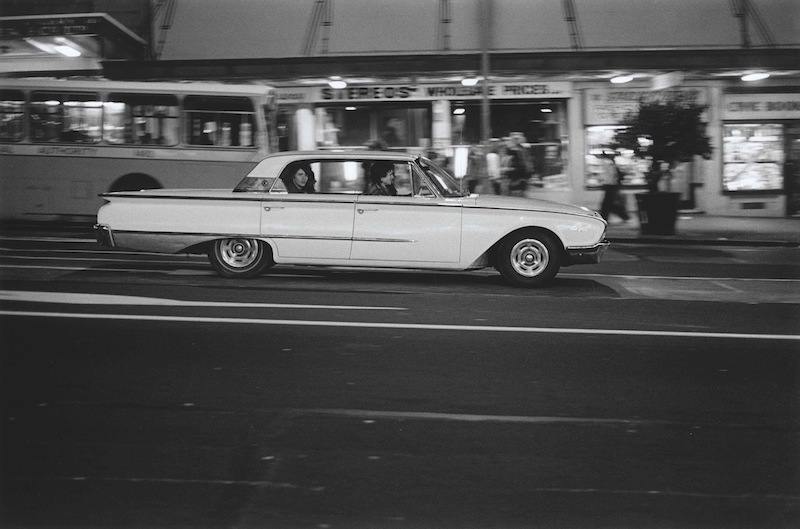
But before all that, Murray took his camera down to Auckland’s main street late at night and took photos of young people mucking around in muscle cars. For 30 years, many of the negatives were missing. They’ve only recently been found and restored for an exhibition, along with the memories they carry.
Videos by VICE
VICE talked to the humble and somewhat shy Murray about the Queen Street V8 scene, New Zealand in the 70s, and his exhibition Flash Cars now.

VICE: Hi Murray, your name is more familiar to the general public as a music guy than a photographer. Do you see the two passions informing each other?
Murray Cammick: When you’re a young adult, I think you look for an identity and mine became “a photographer.” One of my reasons for starting Rip It Up was to publish my photography. The publishing of Rip It Up took over my life and eventually I used other photographers such as Kerry Brown. While I ran Wildside Records I enjoyed taking photos of Shihad concerts etcetera. People on the street enjoying life through having a cool V8 or having a bomb that needs a bit of work all have a lot in common with music fans in a mosh-pit. They are both enjoying life, meeting people.

Was it always your intention to have these photos as a series?
I was quite a serious young lad, very aware of the documentary tradition of photography. I was more of a fly-on-the-wall sort of guy, not a confrontational portrait photographer. I was no Dianne Arbus. Some of my best earlier shots were when people confronted me, sometimes gruffly saying, “take our photo!” I obliged and we were both happy.

Did you exclusively document Auckland? Were there other scenes happening around the country that caught your eye?
I worked for Craccum, the student newspaper at Auckland University in 1975 and 1976 so I was asked to photograph the Maori Land March, I photographed a National Party conference in Wellington but other than music, I have done nothing in-depth like Flash Cars. I photographed that scene for about seven years. It was something I did many Friday and Saturday nights for something to do—one hundred nights plus. When Rip It Up started in 1977, I’d still see what cars were around town, after going to a concert.

Do you think the days of muscle cars are numbered?
They are like living works of art—some of their rare fins and tail lights are major works of mid-century modern design like Googie architecture. They are becoming Sunday cars, as they are gas guzzlers. Weirdly, our appreciation of vinyl records is not very environmentally friendly. I asked a friend with six classic Fords to park one outside the exhibition. He couldn’t oblige as none of them have current registrations.

What’s the favourite car you’ve ever owned?
I’m a slob and should not be allowed to own any quality car. I bonded instantly with a woman a week back as neither of us ever wash our cars. I did point out that I am prepared to wash and clean mine if I have to pick my brother up at the airport. I quite liked a zippy, tiny early Holden Barina that you could drive forwards into a car park at 30 kilometres an hour, then stop. The Wildside Records workhorse Honda was quite reliable. I was driving a Morris Minor in the early days of the Flash Cars.

You once said that you stand still and that time moves in circles around you. Every 10 years you’re horribly out of fashion, five years later you’re ahead of the game, and five years on again you’re right on point with what’s happening. Some of the images in the exhibition look like they were captured last Saturday. Are you now on point?
I was speaking of music when I said I stay in the one place. I guess my love of soul, funk, Motown, and disco go in and out of fashion. I embrace the new but with Tame Impala, for instance, they embrace the old with the disco vibe of “Let It Happen”. That’s a band that looks like it stepped out of the 70s.

Looking back over these photos, what memories stand out the most?
There are about 2,300 images from Queen St of that time and what I like is seeing everyone hanging out and enjoying themselves. Some of the younger guys are almost standing in a protective formation, wary of the older guys that may have had a few run-ins with the law. The people contribute so much to the photos in terms of energy and character. These photos make a lot of my more recent photos look like a bit of a yawn. Young folks—as I was then—are the best at photographing their peer group.
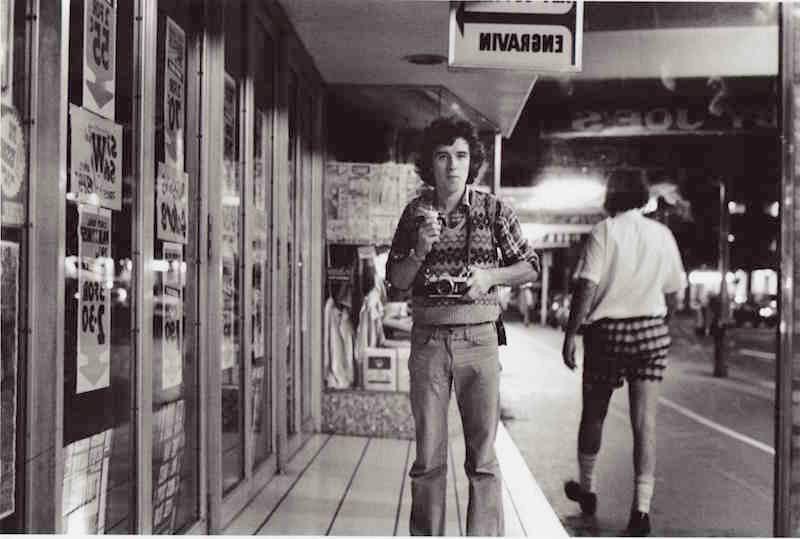
A selfie of Murray Cammick, eating an ice-cream.
What do you miss about New Zealand in the 1970s and what are you glad to see gone?
Looking at the more deserted images—where there’s only a few cars in a near empty street—the phrase “small town in Texas” comes to mind. Auckland was a big city in the 70s, yet life had moved to the ‘burbs. When the movie theatre crowd went home the main street of Auckland was left in the capable hands of V8 owners—with a whole lot of wannabes in Zephyrs and Vauxhalls sheepishly daring to enter their territory at their own risk. Maybe not brave enough to actually park on.
It is good that the restrictive years of Muldoon Government and the 10 PM bar closing time is long gone. This was the decade when the Government thought that later bar or clubs licenses could be introduced and generously gave Auckland two club licenses, Wellington two and Christchurch one.
Although that old small-town feel was cool, whether in American Graffiti or Queen Street, Auckland—that small-town thinking with Government as moral guardian and dispenser of overseas funds, had to go.
Flash Cars features at the Black Asterisk Gallery, Auckland, until August 31.
More
From VICE
-

Daniel Garrido/Getty Images -

-

Steve Jennings/Getty Images -

Screenshot: The Pokémon Company
