
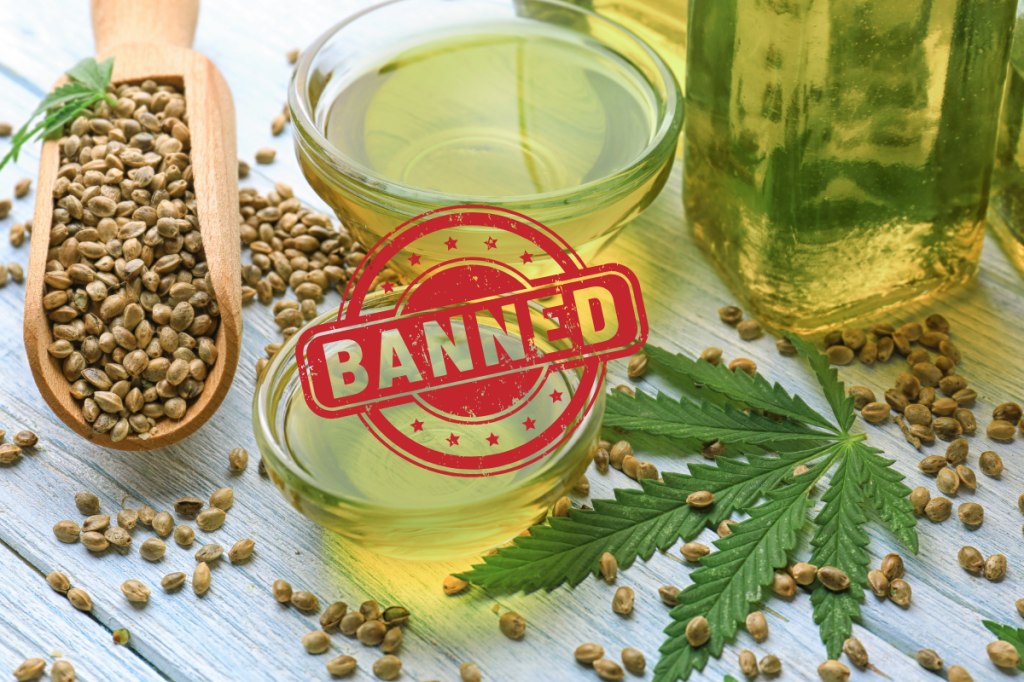
We’re less than a year away from the upcoming hemp ban that was conveniently tucked into the spending bill that ended the government shutdown last month. The ban would put an end to the 2018 Farm Bill loophole that made it possible for companies to produce and sell delta-8 THC, THCa, and other intoxicating hemp-derived products that fit under the legal definition of hemp: less than 0.3% delta-9 tetrahydrocannabinol (THC).
The ban would wipe out most of the $28 billion hemp market that employs more than 300,000 people, primarily across states without legal cannabis markets. How’s that for progress?
MORE HEMP BAN DETAILS: THC Ban Hidden in Government Bill Has Hemp Brands in Panic Mode, Stock Up Just in Case
Wondering what to expect with the upcoming hemp ban? Here’s the scoop:
Can I still buy weed?
If you’re in a state with a legal cannabis market, you can still buy weed. State-legal dispensaries and products are not impacted by this ban.
But if you’re in a state without a legal cannabis market and you rely on hemp-derived THCa, delta-8 THC, and other alternatives, say goodbye to your favorite products if the ban goes into effect as planned. For a hemp-derived product to remain legal under the new proposed rules, it must contain less than 0.4 mg of any kind of THC per package. That’s an extremely low number–one that wouldn’t even come close to getting most people high.
Will all hemp products go away?
No, not all hemp products will go away, but their availability will significantly decrease. However, some states with active hemp markets may lean on their own hemp regulations to allow hemp operations to continue.
For example, The Texas Alcoholic Beverage Commission (TABC) is continuing forward with its efforts to regulate consumable hemp products despite the impending federal ban. The TABC plans to adopt permanent regulations for a Texas hemp industry to replace the recent emergency rules that barred THC sales to anyone younger than 21 in September.
They’re expected to follow Texas Governor Greg Abbott’s executive order that directed the TABC and Department of State Health Services to create stricter regulations on licensed hemp businesses.
Texas Cannabis Policy director Heather Fazio told the Texas Tribune, “We’ve come to a place, at least in Texas, where THC is a legal commodity that responsible adults are enjoying, and it came about in a way that was much different than many of us would have expected.”
While states with robust hemp industries may strengthen their own state regulations, the ban will still eliminate interstate commerce, a benefit made legal by the 2018 Farm Bill.
Will hemp-derived products become more expensive?
Hemp-derived products will likely become more expensive as a result of the ban. Products in state-licensed cannabis dispensaries are typically significantly more expensive than hemp-derived THC products because of strict regulations and tax requirements.
State-licensed cannabis operators are also barred from writing off cannabis business expenses because the plant is still federally illegal. Even if hemp-derived products are legal in a given state, they may face the same tax restrictions, leading to higher prices passed on to consumers. Yay!
Will CBD products go away?
Some CBD products may still remain available after the hemp ban takes place. These include products with zero traces of cannabidiol (CBD)–a much less common product type than those that contain small amounts of THC alongside CBD.
Many people prefer CBD products with trace amounts of THC because of a phenomenon known as the “entourage effect.” Although we don’t have enough definitive scientific evidence of the entourage effect, it’s widely used to describe full-spectrum CBD products that work better because “the whole is greater than the sum of its parts,” or something like that.
While non-intoxicating, many full-spectrum CBD products contain more THC than the upcoming federal ban will allow. We can expect to see many CBD brands disappear from shelves.
Will THC Drinks Go Away?
Under the proposed new ban, many of the THC drinks the public has come to love will disappear. Just as the THC beverage market creeps up to a projected $10 billion industry, new restrictions will erase much of that progress.
MJBizDaily reports up to 750 brands in the THC beverage space across the country, with only about 200 selling drinks in state-legal dispensaries. The other 550 sell hemp-derived THC beverages to consumers around the country.
For Kim Sanchez Rael, CEO and co-founder of Azuca, a cannabis technology company that specializes in optimizing cannabinoid delivery times, the ban is a huge setback for the normalization of the plant.
“We are at a critical moment: much of the innovation and normalization that has been built over the past several years is now vulnerable,” she said in an email statement. “For farmers, brands, and consumers who embraced full-spectrum hemp, adult-use cannabinoid beverages and edibles, the potential outcome represents more than regulatory change, it’s a setback for consumer choice, progress and opportunity.”
Will the hemp ban be enforced?
Whether the ban will be enforceable is a whole other matter. The Congressional Research Service (CRS) issued a report earlier this month saying that, “it remains unclear if and how federal law enforcement will enforce the new prohibitions when the new definition goes into effect.”
Yep, after all the chaos this upcoming ban has caused among industry players and consumers, we’re now hearing that it might not get enforced.
The report goes on to say, “It also remains to be seen whether FDA will pursue additional options to remove these items from the market. Both FDA and DEA may lack the resources to broadly enforce the laws prohibiting intoxicating hemp products on the market.”
So, here we are, less than a year away from a hemp ban threatening a nearly $30 billion industry and hundreds of thousands of jobs. And congress’ own think tank isn’t sure if the ban will hold up. Meanwhile, industry players are scrambling.
Plans are currently on hold for the next Hemp Beverage Expo, an executive-level trade event focused on the hemp beverage industry.
For George Jage of Jage Media, producers of the Hemp Beverage Expo, despite the current chaos, there’s room for optimism.
“The industry remains optimistic that, despite the ban, we can establish a regulatory system in the coming year to address the public’s concerns. Almost everyone agrees we need age-gating, testing, and milligram caps,” Jage said. “People are drawing the wrong lines. Cannabis is against hemp because they are not tested, taxed, and regulated. This is all one plant. Alcohol manufacturers are opposed to hemp beverages because they are seeing their sales decline. People want alternatives to alcohol.”
For Jared Stanley, co-founder and board member of prominent CBD brand Charlotte’s Web, the stakes are high. Stanley and his brothers developed the Charlotte’s Web strain years ago, naming it after Charlotte Figi, a young girl who experienced a reduction in her epileptic seizures after trying medical marijuana.
“I helped build this industry because people were desperate for real solutions–safe, trusted hemp products that improve lives…If lawmakers don’t get this right and a ban happens, the fallout will be catastrophic. I believe that healthcare costs, ER visits, and insurance premiums will skyrocket. Removing hemp means pushing veterans and people managing pain toward harmful, addictive choices they fought so hard to leave behind. And worst of all, families, seniors and people who turned to hemp when conventional options failed, will suffer needlessly.”
Consider Stocking Up on Your Favorite THC Products


Delta-8 Gummies (opens in a new window)

More
From VICE
-
Images by WWE / Collage by Haley Miller -
XNY/Star Max/GC Images -

Roy Rochlin/Getty Images for MTV -

(Photo By Raymond Boyd/Getty Images)
